
From chilling history and hidden underground worlds to after-dark adventures, discover five ideas to inspire…
50 Years of Rock Against Racism 10th September 2026 to 3rd January 2027
The British Music Experience to Mark 50 Years of Rock Against Racism with New Temporary
Exhibition
In 1976, a group of activists wrote an impassioned letter to the NME in response to Eric
Clapton’s public support for Enoch Powell and his anti-immigration rhetoric.
“We want to organise a rank-and-file movement against the racist poison in rock music” they
declared, calling on musicians and music fans to unite against racism, reaffirming the power
of music as a force for social change.
The response was immediate. Hundreds of people responded, providing the momentum that
would see Rock Against Racism develop into a nationwide movement. Between 1976 and
1982, Rock Against Racism activists organised national carnivals and tours, alongside local
gigs, clubs and events across the country, bringing together musicians and audiences from
diverse backgrounds in opposition to racism.
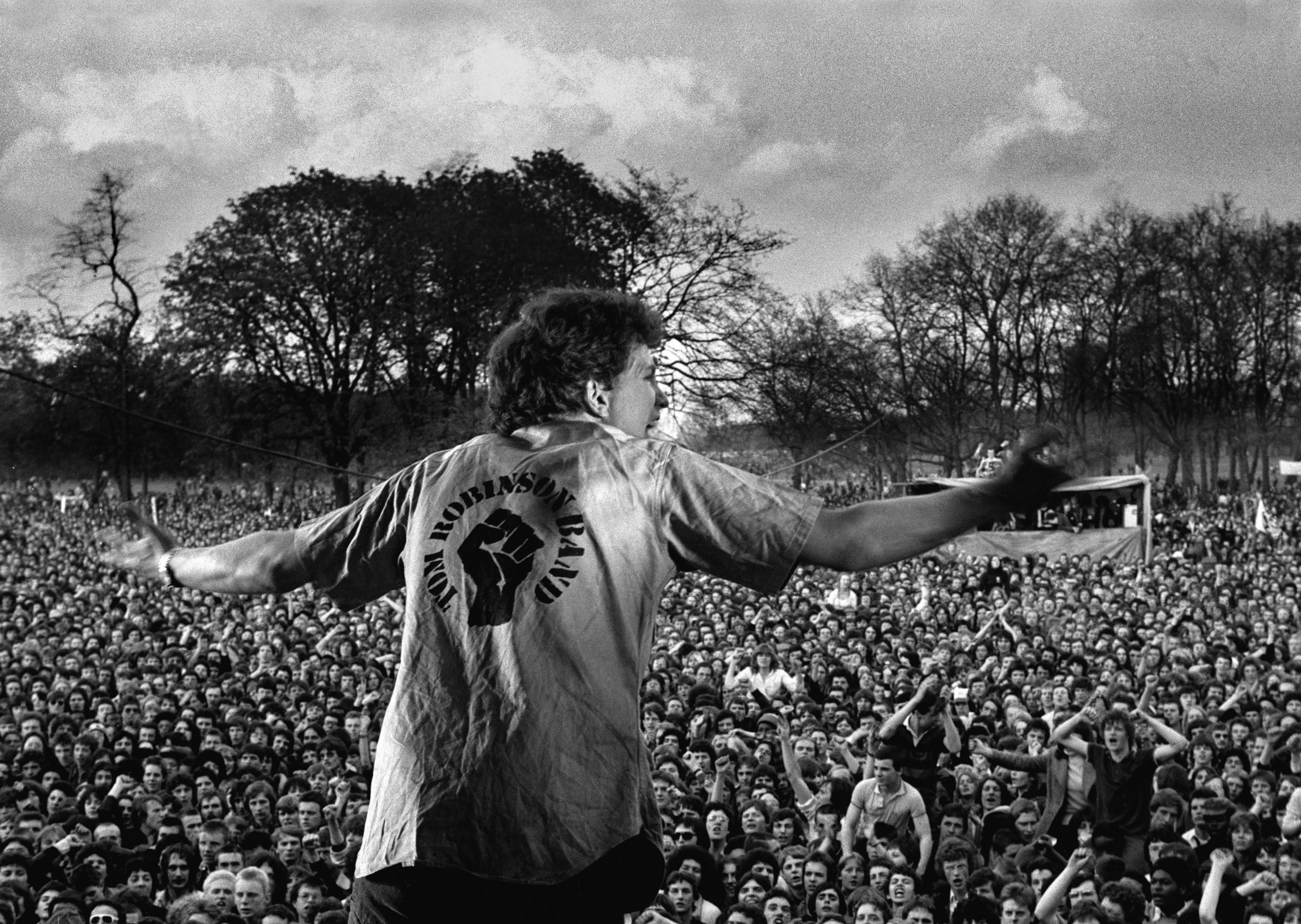
One of the movement’s defining moments came on 30th April 1978, when around 100,000
people marched six miles from Trafalgar Square to Victoria Park in Hackney for a huge openair
carnival. Featuring performances from The Clash, Steel Pulse, the Tom Robinson Band, XRay
Spex and Patrik Fitzgerald, the event also saw Southall-based reggae group Misty In Roots
lead the march from the back of a lorry. It became one of the largest and most significant
music-led demonstrations against racism of its time.
The event also inspired action closer to home. Travelling back from the London carnival, Rock
Against Racism’s Bernie Wilcox and Geoff Brown of the Anti-Nazi League were inspired to
bring the same spirit of protest and celebration to the North West. On 15th July 1978, the Rock
Against Racism Northern Carnival took place at Alexandra Park in Manchester, attracting an
estimated 40,000 people. The line-up featured Steel Pulse, Buzzcocks, X-O-Dus and China
Street.
Beyond the carnivals, Rock Against Racism worked alongside the Anti-Nazi League and local
campaigners to challenge the National Front and racism across Britain, while its network of
gigs, publications and grassroots groups created spaces where music and political activism
could come together.
Rock Against Racism changed British popular culture. The movement helped normalise the
idea that anti-racism could be part of youth culture rather than something belonging solely
to political meetings. Its fusion of punk, reggae, ska and other Black and white musical
traditions helped shape the culture of the early 1980s.
The movement’s belief in music’s ability to challenge prejudice and bring people together
remains as relevant as ever. Today, organisations including Love Music Hate Racism and Stand
Up To Racism continue the fight against racism, with music and culture remaining important
tools for mobilisation, solidarity and expression. On 28th March 2026, an estimated 500,000
people gathered in London for an anti-racist demonstration organised by the Together
Alliance and supported by musicians and bands. Fifty years after Rock Against Racism
emerged, the connection between music, culture and resistance remains as powerful as ever.
To mark the 50th anniversary of Rock Against Racism, the British Music Experience will
explore the movement’s history through a new temporary exhibition. Bringing together a
selection of powerful photographs captured by photographers Syd Shelton and John Sturrock,
alongside original posters, placards and magazines, the exhibition will revisit a pivotal
moment in British music and social history – and celebrate the enduring relationship between
music, activism and social change.
The exhibition takes place both inside the museum and the Star Café & Bar. The exhibition
inside the Star Café & Bar is free to visit. The museum exhibition is included with all general
entry tickets. To purchase general entry tickets, go to www.britishmusicexperience.com
Jo Cester, Collection and Public Programme Manager for the British Music Experience
comments, “Rock Against Racism occupies an important place in British music history. The
extraordinary response to the movement demonstrated that music could provide a powerful
platform for activism, protest, solidarity and social change. Fifty years on, these images offer
a vivid reminder of the energy and determination of a generation of musicians, activists and
music fans who refused to remain silent. For the British Music Experience, this exhibition is
an opportunity to preserve and share that history, while highlighting a message that remains
as important today as it was in 1976 – music has the power to bring people together.”
Alan Brown from Love Music Hate Racism Merseyside comments, “Love Music Hate Racism is
delighted to be working with the British Music Experience on the exhibition and launch event
marking 50 years of Rock Against Racism. Rock Against Racism alongside the Anti-Nazi League
was instrumental in opposing racism and the rise of the National Front in the late ‘70s and
early ‘80s. Rock Against Racism made it cool to be anti-racist. Rock Against Racism serves as
inspiration for us to be active anti-racists. Rock Against Racism shows us we can win. Reggae
soul rock n roll jazz funk punk – our music!”
Exhibition Launch Event
50 Years of Rock Against Racism
Film Screening plus Q&A with Roger Huddle and Tom Robinson
Thursday 1st October, 2026, doors 6pm, film 7pm
An evening marking the 50th anniversary of Rock Against Racism, with a screening of the 2019
documentary ‘White Riot’ followed by an in-conversation with RAR founder, Roger Huddle
and musician, radio presenter and long-time activist, Tom Robinson.
A ticket to the launch event gives exclusive access to the 50 Years of Rock Against Racism
exhibition (other museum galleries closed).
Tickets £10 each.

Related Posts